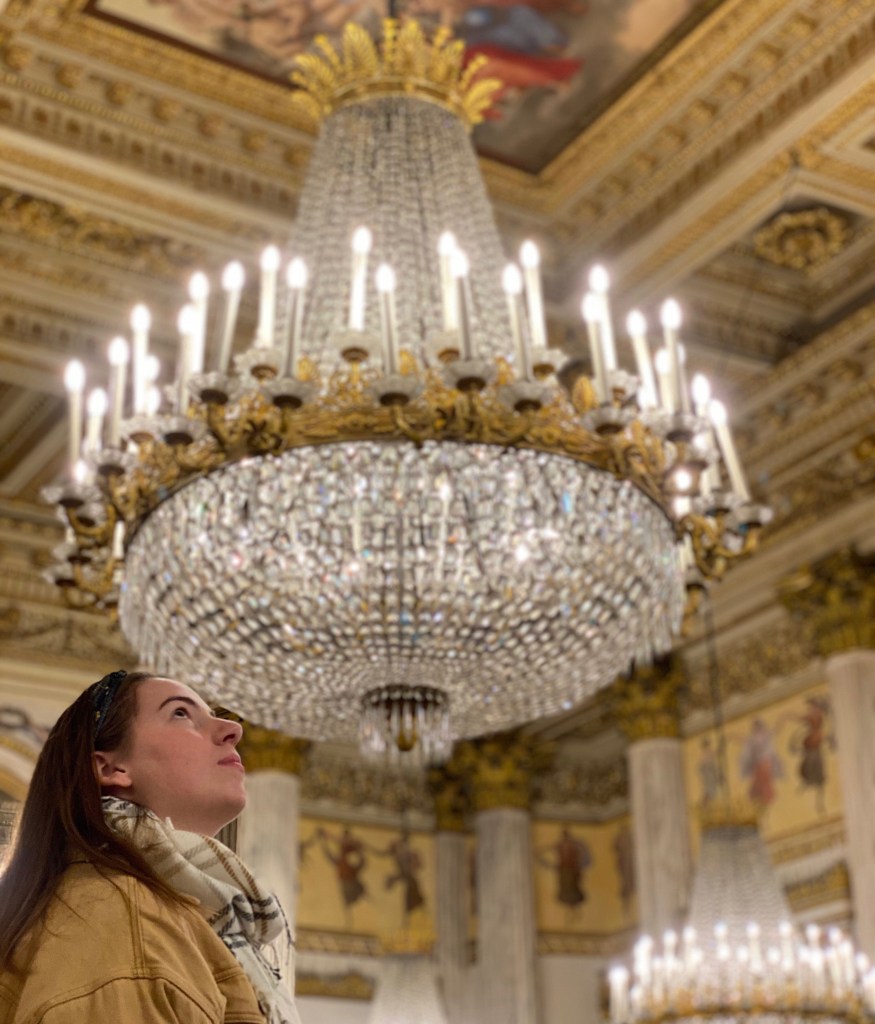
At the end of February, the atmosphere in Florence shifted. News spread through the city of a traveler returning from Milan who was complaining of coronavirus symptoms and was hospitalized.
Skye Jeansonne, an interior design senior at LSU, spent the winter preparing for a semester abroad at Santa Reparata International School of Art in Italy. The opportunity appeared late in her fall semester and excited her.
Jeansonne’s semester in Florence came to an abrupt end as hotspots developed across Italy, and the coronavirus pandemic forced the world to a halt. She traveled home less than a week before the borders closed.
She said she was grateful to have experienced a few short months abroad, but in the wake of the pandemic, many LSU students would not be so lucky. Students have been caught in a limbo as a new wave of spring cancellations appear and the opportunity for international travel remains unsafe.
On Thursday, Oct. 29, LSU announced the cancellation of all international exchanges for the spring semester in response to the continuing worldwide Level 3 and 4 travel advisories.
Higher levels encourage travelers to reconsider or avoid travel due to serious safety risks. This decision was made to fit recommendations from the Center for Disease Control and Prevention.
Students traveling internationally may face unpredictable circumstances, restrictions, and challenges in returning home or accessing health care while abroad, according to the CDC.
“In the beginning, a lot of my professors were not concerned,” Jeansonne said. “They said our last resort would be sending you home and we will do everything to avoid that. I had no sense that things would get much worse.”
Locals filled the grocery stores buying food and cleaning supplies in bulk. The tourist season began, and Florence flooded with visitors. Some started wearing masks as the uncertainty grew.
Schools from around the United States began pulling their students home, and Jeansonne’s class got smaller and smaller. She sat down with the director of the art school.
“She advised us the smartest thing to do would be to leave as soon as possible,” Jeansonne said. “It happened very quickly. Two days later, I was on a plane home.”
Students applying to leave in the summer and fall were also unable to leave as restrictions remained in order. Mass communication senior Ariel Baise planned to participate in LSU’s program at the Lions International Festival of Creativity, a global gathering in France of professionals working in advertising and related fields. She was devastated when she received an email about its cancellation. The event switched to an online format, but Baise declined to attend.
“This year has been one big flop, nothing I expected to happen happened, and I’m just here sitting in my room,” Baise said.
After the cancellation of Fall 2020 programs, LSU Academic Programs Abroad was hopeful that restrictions would be lifted and that it would be safe for students to travel in the spring. But covid-19 cases continued to climb.
On Friday, Nov. 6, the New York Times reported more than 100,000 new coronavirus cases in a day for the first time.
APA Director Harald Leder expressed his frustration alongside students.
“Right now, everything is on hold,” Leder said. “When you look at the world news, it’s not looking good. In Europe, they are entering their second wave and South and Latin America haven’t really gotten out of the first one just like us.”
He said he still encourages younger students not to throw away their plans completely and to keep their faith. Many LSU faculty members are planning for 2022 because it’s the safer option.
“Try to be patient, look at your options and save up.” Leder said. “Once you are able to, take the best opportunity you can and go.”
 Bella Biondini